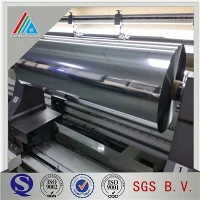
Hey there! As a BOPP film supplier, I often get asked about the thickness range of BOPP film. So, I thought I'd write this blog to share some insights on this topic.
First off, let's understand what BOPP film is. BOPP stands for Biaxially Oriented Polypropylene. It's a type of plastic film that's made by stretching polypropylene in both the machine direction (MD) and the transverse direction (TD). This biaxial orientation gives the film some great properties like high tensile strength, good clarity, and excellent moisture barrier.
Now, onto the thickness range. BOPP film comes in a wide range of thicknesses, and the typical range can vary depending on the application. Generally, the thickness of BOPP film can range from as thin as 12 microns to as thick as 60 microns.


Thinner BOPP Films (12 - 20 microns)
Thinner BOPP films, in the range of 12 to 20 microns, are often used for applications where flexibility and transparency are key. For example, they're commonly used in food packaging, especially for snacks like chips and crackers. These thin films provide a clear view of the product inside, which is great for marketing. They're also lightweight, which helps to reduce shipping costs.
Another application for thin BOPP films is in label printing. The thinness allows for easy adhesion to various surfaces, and the high clarity ensures that the printed labels look sharp and professional.
Medium - Thickness BOPP Films (20 - 35 microns)
Medium - thickness BOPP films, from 20 to 35 microns, have a wider range of applications. They're often used in lamination processes. For instance, when you want to laminate paper or cardboard to give it a more durable and glossy finish. These films can also be used in the production of adhesive tapes. The medium thickness provides a good balance between strength and flexibility, making them suitable for wrapping and sealing.
Thicker BOPP Films (35 - 60 microns)
Thicker BOPP films, in the range of 35 to 60 microns, are used for applications that require more strength and durability. They're commonly used in heavy - duty packaging, such as for industrial products or large consumer goods. The extra thickness gives the film better puncture resistance and can withstand more handling and rough conditions.
It's important to note that the thickness of the BOPP film can also affect its cost. Thinner films are generally less expensive, while thicker films are more costly due to the additional material used. So, when choosing the right thickness for your application, you need to consider both the performance requirements and the budget.
Now, if you're in the market for other types of polypropylene films, we also offer CPP Film and MCPP Film 20mic 25mic 30mic. These films have their own unique properties and applications. For example, CPP Film is often used in packaging applications where heat - sealability is required, and CPP Film Laminated Film is great for creating a multi - layer packaging structure.
If you're interested in purchasing BOPP film or any of our other polypropylene films, I'd love to have a chat with you. We can discuss your specific requirements, the best thickness for your application, and get you a quote. Just reach out to us, and we'll work together to find the perfect solution for your business.
References:
- Industry reports on polypropylene film manufacturing
- Technical specifications from BOPP film producers
So, don't hesitate to contact us if you have any questions or if you're ready to start a purchase. We're here to help you get the best film for your needs!