


Why Choose Us?
Quality Guaranteed
The company strives for the market with quality and has advanced technicians in the field of deep cultivation. Through skill improvement and achievement transformation, the company continuously provides high value-added products to customers to meet their special needs.
Quality Products
The company mainly produces PET, CPP, OPP, PA, PE, PVC, chemical pretreatment film and non-woven aluminized products, as well as color coating film, shower film, rainbow film, laser film, PVDC coating film, twist film, plastic flexible packaging composite film.
Wide Range of Applications
Our products are widely used in medicine, food, building materials, electronic components composite packaging and gold and silver wire, Pearl pieces, onion powder, decoration, Christmas gifts and other industries.
Complete Qualifications
It invests a large amount of money in new product development and technological upgrading every year to meet the needs of customers in various directions, and realizes core technologies such as a number of patents for technological inventions and practical new patents.
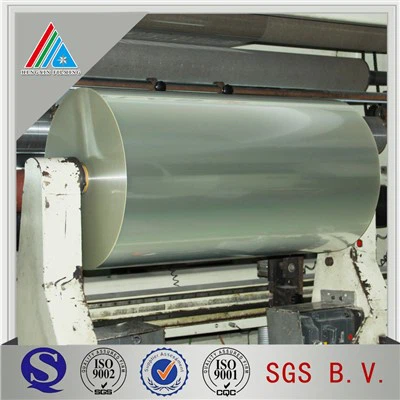
Polypropylene (PP) film is a thermoplastic material that is known to be cost-effective and 100% recyclable. Polymer Films is offered with a matte finish and clear coloring. Polypropylene film has high clarity, high gloss, good tensile strength properties, and a high melting point making it suitable for applications that require sterilization at high temperatures. Its unique properties make polypropylene material most suited for applications in the Packaging and Food and Beverage industries. Polypropylene film is known for its low odor, high chemical resistance, and inertness, making it the preferred choice for packaging applications that require FDA regulations. Common applications where polypropylene film is seen include food wraps, candy packaging, shrink wrap, tape liners, diapers and sterile wrap, and cigarette packaging.


Product Categories
Latest Products


Polypropylene film is a versatile and durable product that is used for a wide range of applications. Made from high-quality polypropylene resin, this film is known for its excellent thermal stability and chemical resistance. It features a smooth surface that is perfect for printing, laminating, and converting. This film is commonly used in packaging, labeling, and graphic arts industries due to its exceptional clarity, high gloss, and superior printability. It is also a popular choice in the electrical, automotive, and construction industries, where it is used as a moisture barrier, insulator, and protective film. With a wide range of thicknesses, widths, and lengths available, polypropylene film can be customized to meet specific application requirements.
Printing on polypropylene film is first of all a choice of using eco-friendly material. Secondly the pp film recycles very well. It does not relies harmful substances to the environment and above all it prints great.
Polypropylene film is highly durable material made from biaxially oriented polypropylene. It offers good printing experience resulting in comfortable work with great effects. It has very high resistance thanks to which it is suitable for both indoor and outdoor applications. The high production standards guarantee the quality in all of its volume.
The polypropylene film makes ultra high quality images transfer possible. The chemical properties of the coat significantly shorten the dry-time. As a result it allows to achieve great printing effects with lower amount of ink. The eco-friendly character of the film is another value of the product. This makes it safe to the end-users and also for the people who prepare the final product.
Polypropylene is waterproof and water-resistant. While these terms might seem interchangeable, there's a fine line between the two. Waterproof means that something is impervious to water. Water-resistant means that an item can block out most water and liquid, but not everything.
This means waterproof items are also water-resistant, but not the other way around. Polypropylene is both waterproof and water-resistant. However, when it's mixed with other materials, the resulting mixture may not be as waterproof.
For example, many shampoo companies use polypropylene bottles to hold their products. The companies get an affordable, flexible, lightweight material that works within the budget. Imagine what would happen if the firm substituted a water-resistant plastic for the polypropylene resin. How many showers would the new bottles survive before breaking down?
The bottom line is that polypropylene is water-resistant, but it's more than that because it's waterproof. Whenever you need something to keep your items dry and secure, polypropylene is your best bet.

Printing and Bag-Making Properties of Six Types of Polypropylene Films
Polypropylene is polymerized from the oil after high-temperature cracking of petroleum under the action of a catalyst. According to different film-forming processing methods, polypropylene films with different properties can be obtained. Commonly used include general-purpose BOPP, matte BOPP, pearlescent film, Heat-sealed BOPP, cast CPP, blow-molded IPP, etc.
General-purpose BOPP film
BOPP film is processed by stretching the amorphous or partially crystallized film in the vertical and horizontal directions above the softening point, so that the surface area of the film is increased, the thickness is thinned, and the gloss and transparency are greatly improved. At the same time, due to the orientation of stretched molecules, its mechanical strength, air tightness, moisture barrier, cold resistance and other aspects have been greatly improved.
Matte BOPP
The surface layer of matte BOPP is designed as a matte layer, which makes the appearance and texture similar to paper and feels comfortable. The matting surface layer is generally not used for heat sealing. Due to the existence of the matting layer, compared with the general BOPP, it has the following characteristics: the matting surface layer can play a role in shading, and the surface gloss is also greatly reduced; the matting layer can be used as a heat cover when necessary; the matting surface layer The smoothness is good, and the film roll is not easy to stick due to the anti-adhesive property due to the rough surface; the tensile strength of the matte film is slightly lower than that of the general film, and the thermal stability is also slightly worse than that of ordinary BOPP.
Pearlescent film
The pearlescent film is made of PP as raw material, adding CaCO3, pearlescent pigment and rubber modifier, and biaxially stretching after mixing. Since the PP resin molecules are stretched during the biaxial stretching process, and the CaCO3 particles are stretched apart from each other, forming cells, the pearlescent film is a microporous foam film with a density of 0.7g /cm³ or so.
PP molecules lose their heat-sealability after being biaxially oriented, but as a modifier such as rubber, they still have certain heat-sealability, but the heat-sealing strength is very low, and they are easy to tear. They are often used in the packaging of ice cream, popsicles, etc.
Heat-sealing BOPP film
• Double-sided heat-sealing film:
This film has an ABC structure, and both sides of A and C are heat-sealing layers. Mainly used as packaging materials for food, textiles, audio-visual products, etc.
• Single-sided heat-sealing film:
This film has an ABB structure, and layer A is a heat-sealing layer. After printing the pattern on the B side, it is compounded with PE, BOPP and aluminum foil to make a bag, which is used as high-grade packaging materials such as food, beverage and tea.
Cast CPP film
Cast CPP polypropylene film is a non-stretched, non-oriented polypropylene film.
CPP film is characterized by high transparency, good flatness, good high temperature resistance, a certain degree of stiffness without loss of flexibility, and good heat sealability. Homopolymer CPP has a narrow heat sealing temperature range and high brittleness, so it is suitable as a single-layer packaging film.
The performance of the copolymerized CPP is balanced, and it is suitable as the inner layer material of the composite film. At present, it is generally co-extruded CPP, which can make full use of the characteristics of various polypropylenes to combine, making the performance of CPP more comprehensive.
Blow molding IPP film
IPP blown film is generally produced by down-blowing method. After PP is extruded and inflated at the ring die, it is cooled by the wind ring and then quenched and shaped by water. After drying, it is coiled. The finished product is a tubular film, which can also be Cut into a film. Blow-molded IPP has good transparency, good rigidity, and easy bag making, but its thickness uniformity is poor, and the flatness of the film is not good enough.
Is Polypropylene Film Safe?
Polypropylene (PP) is usually considered safe for humans. It is considered the safest of all plastics; it is a robust heat-resistant plastic. Because of its high heat tolerance, it is unlikely to leach even when exposed to warm or hot water. It is approved for use with food and beverage storage. It can be re-used safely and used with hot beverages.
However, few studies have reported that it can leach on plastic additives and cause occupational asthma. It is less likely to contain fillers, plasticizers, and additives compared with many other plastics, but they may still be present. Unfortunately, without better disclosure from manufactures about the content of specific plastic materials, we can only speak about toxicity and safety in general terms.
• Several safety organizations including the International Agency for Research on Cancer (IARC) and Occupational Safety and Health Administration (OSHA) do not find PP to be carcinogenic according to its Safety Data Sheet.
• PP is very similar to polyethylene but has higher resistance to heat, which is why it is often used for food packaging and food storage bags and containers.
Correct Preservation Method of Polypropylene Film
Polypropylene film is a very common material, which is widely used in household, automobile, medical equipment, cosmetics and other fields. However, many people don't know much about the preservation method of Polypropylene. The preservation method of Polypropylene film will directly affect its service life and performance, therefore, the correct preservation method is very important.
Avoid sun exposure
Polypropylene films will age and deteriorate quickly when exposed to sunlight for a long time, so avoid them being exposed to sunlight for a long time. If the Polypropylene film must be placed outside, you need to choose a shaded and shaded place. In addition, it should be noted that during the high temperature in summer, try not to place Polypropylene films in the car or other high-temperature environments to avoid accidents.
Prevent moisture
Polypropylene films have extremely low water absorption, but the risk of moisture attack cannot be completely ruled out. Long-term storage in a humid place will easily lead to deformation and fading of Polypropylene film. Therefore, when storing Polypropylene films, be sure to keep them dry, you can put them in an airtight container, or pack them in plastic bags.
Avoid contact with acid and alkali substances
Polypropylene films are easy to react with chemical substances such as strong acids and strong alkalis, so Polypropylene films should be avoided from contacting these substances to prevent chemical properties from changing and affecting the service life of the product. If unfortunately it comes into contact with acid and alkali substances, it should be cleaned with cleaning agent in time to avoid unnecessary damage.
Regular maintenance
The surface of Polypropylene film is easily polluted by dust, grease, etc. During use, it needs to be cleaned and maintained frequently to ensure its smooth surface and beautiful appearance. In addition, when Polypropylene films have not been used for a long time, regular inspection and maintenance work is also required to prevent them from aging, cracking, etc.
Is Polypropylene Film Good for Posters?
Polypropylene film is a thermoplastic polymer used in a wide variety of applications. In the large format or wide format printing arena, the material is traditionally used for outdoor event graphics, trade show displays, point of purchase advertising, posters, signs and banner stands.
It therefore needs to exhibit flexibility alongside its strength and so requires a careful mix of ingredients in the polymerisation production process to avoid it becoming too brittle and hard. When this fine balance is disrupted or swings too far one way or another. The results can mean it is less weather resistant, particularly to extremes of climate such as freezing and wind. Sadly this means it will rapidly degrade over time (and quicker than it should do for a properly made media).
How Long Does Polypropylene Film Last in the Sun?
There are some kinds of Polypropylene films that embed titanium oxide or zinc oxide into the fibers. These metal salts absorb the UV light and help to reduce exposure to the fibers. If Polypropylene films do not have these UV absorbers embedded that they will break down within a few months in sunlight.
Plastic fibers are useful for many consumer and industrial purposes. Polypropylene and polyester are both common for people to use and work with daily. These two kinds of plastics demonstrate very different characteristics, especially when concerned with UV resistance. Polypropylene is susceptible to quick degradation by sunlight while polyester innately resists deterioration. Polypropylene film is useful for applications that require high heat, chemical, or electrical stresses, but polyester is more suitable for outdoor uses and environmental exposure.
Our Factory
Hangzhou Hengxin (Jingxin) Film Packaging Co., Ltd. was established in 1996. After decades of growth, Hangzhou Hengxin (Jingxin) Film Packaging Co., Ltd. has developed into a well-known vacuum coating enterprise at home and abroad. Induction vacuum coating is the industry leader. Its products sell well at home and abroad, such as the United States, Canada, Mexico, Brazil, France, Germany, Spain, Turkey, etc. Russia, Pakistan, Malaysia, Iran, Indonesia, Vietnam, Thailand, Philippines, Japan, South Korea and South Africa.

Ultimate FAQ Guide to Polypropylene Film
Hangzhou Hengxin Filming Packaging Co., Ltd. is one of the most professional polypropylene film manufacturers and suppliers in China for over 25 years, specialized in providing high quality products with low price. We warmly welcome you to buy or wholesale bulk cheap polypropylene film in stock here and get quotation from our factory. For customized service, contact us now.
Bopp Thermal Lamination Film, CPP Film, OPP Film