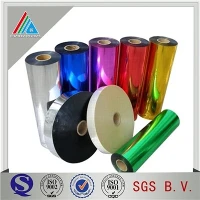
As a supplier specializing in CPP Film, I've encountered numerous quality - related challenges in the industry. In this blog, I'll share some practical solutions to address the quality problems of CPP Film, drawing from my years of experience in the field.
Common Quality Problems of CPP Film
Before discussing solutions, it's essential to understand the common quality issues that plague CPP Film. These problems can range from surface defects to mechanical property inconsistencies.
Surface Defects
Surface defects are one of the most visible quality problems. They can include scratches, fish - eyes, and uneven surfaces. Scratches can occur during the production process, such as when the film passes through rollers or is handled during packaging. Fish - eyes are small, round defects that are often caused by impurities in the raw materials or improper processing conditions. Uneven surfaces can result from uneven cooling or improper die design.
Thickness Variation
Thickness variation is another significant issue. Inconsistent thickness can lead to problems in subsequent processing steps, such as lamination or printing. It can also affect the mechanical properties of the film, making it more prone to tearing or breaking. Thickness variation can be caused by factors like uneven melt flow in the extruder, improper die adjustment, or fluctuations in the production speed.
Mechanical Property Inconsistencies
The mechanical properties of CPP Film, such as tensile strength and elongation, are crucial for its performance in various applications. Inconsistent mechanical properties can lead to product failure. For example, if the film has low tensile strength, it may break during handling or use. These inconsistencies can be due to variations in the raw material quality, processing temperature, or cooling rate.
Solutions to Quality Problems
Raw Material Management
The quality of raw materials is the foundation of high - quality CPP Film. As a supplier, I always ensure that we source raw materials from reliable suppliers. We conduct strict quality inspections on incoming raw materials, including testing for melt flow index, density, and other key parameters. By using high - quality raw materials, we can reduce the occurrence of surface defects and improve the overall mechanical properties of the film.
Process Optimization
Optimizing the production process is essential for solving quality problems. In the extrusion process, we carefully control the temperature, pressure, and speed to ensure a uniform melt flow. For example, maintaining a stable temperature in the extruder can prevent the formation of fish - eyes and ensure consistent thickness. We also pay close attention to the die design and adjustment. A well - designed die can help distribute the melt evenly, reducing thickness variation.
In the cooling process, proper cooling is crucial for achieving the desired mechanical properties. We use advanced cooling systems to ensure that the film cools evenly. This helps to improve the film's tensile strength and elongation.
Quality Control Systems
Implementing a comprehensive quality control system is vital for detecting and preventing quality problems. We have in - line quality control devices that continuously monitor the thickness, surface quality, and other parameters of the film during production. These devices can detect any deviations from the set standards in real - time, allowing us to take immediate corrective actions.
We also conduct regular offline quality inspections. Samples are taken at different stages of production and tested in our laboratory for mechanical properties, optical properties, and other quality indicators. By analyzing the test results, we can identify potential quality issues and make necessary adjustments to the production process.


Staff Training
Well - trained staff is an important factor in ensuring the quality of CPP Film. We provide regular training to our employees on production processes, quality control methods, and equipment operation. This helps them to understand the importance of quality and how to identify and solve quality problems. For example, operators are trained to recognize surface defects and adjust the production parameters accordingly.
Comparison with Other Films
It's also beneficial to compare CPP Film with other similar films, such as OPP Film. OPP Film is another popular polypropylene film. While OPP Film has excellent clarity and stiffness, CPP Film offers better heat - sealability. Each film has its own advantages and disadvantages, and the choice between them depends on the specific application requirements.
CPP Metallized Film is a special type of CPP Film that has a thin layer of metal deposited on its surface. This gives the film enhanced barrier properties, making it suitable for applications where moisture and oxygen barrier are required, such as food packaging.
Conclusion
Solving the quality problems of CPP Film requires a comprehensive approach that includes raw material management, process optimization, quality control systems, and staff training. By addressing these aspects, we can produce high - quality CPP Film that meets the needs of our customers.
If you are interested in our CPP Film products or have any questions about quality control, please feel free to contact us for procurement discussions. We are committed to providing you with the best products and services.
References
- "Polypropylene Films: Structure, Properties, and Applications" by X. Lu and S. Fakirov
- "Plastics Extrusion Technology" by Miles A. Spalding