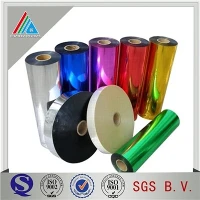
As a CPP film supplier, I often get asked about how to improve the puncture resistance of CPP film. It's a crucial aspect, especially considering the various applications where CPP film is used. In this blog, I'll share some insights and practical tips on enhancing the puncture resistance of CPP film.
Understanding the Basics of CPP Film
First, let's quickly go over what CPP film is. CPP, or Cast Polypropylene, is a type of plastic film known for its clarity, flexibility, and heat-sealing properties. It's widely used in packaging, including food packaging, labels, and lamination. But when it comes to applications where the film might face sharp objects or rough handling, puncture resistance becomes a key concern.
Factors Affecting Puncture Resistance
There are several factors that can influence the puncture resistance of CPP film. One of the most important is the resin used. Different grades of polypropylene resin have different physical properties. For example, high-molecular-weight polypropylene tends to offer better puncture resistance compared to lower-molecular-weight ones. The manufacturing process also plays a significant role. The casting process can affect the film's molecular orientation, which in turn impacts its strength and puncture resistance.
Tips to Improve Puncture Resistance
1. Choose the Right Resin
As mentioned earlier, the choice of resin is crucial. Look for resins with high molecular weight and good impact resistance. Some manufacturers offer specialized resins designed specifically for applications that require high puncture resistance. These resins often have a more uniform molecular structure, which helps in distributing stress more evenly across the film.
2. Adjust the Manufacturing Process
The casting process can be optimized to improve puncture resistance. For example, adjusting the cooling rate during casting can affect the film's crystallinity. A slower cooling rate can result in a more crystalline structure, which generally leads to better puncture resistance. Additionally, proper control of the extrusion process can ensure a more uniform thickness of the film, reducing weak spots that could be prone to punctures.
3. Add Reinforcing Agents
Another effective way to enhance puncture resistance is by adding reinforcing agents to the CPP film. These can include additives such as glass fibers, talc, or other fillers. These agents can increase the film's stiffness and strength, making it more resistant to punctures. However, it's important to find the right balance, as adding too many fillers can affect other properties of the film, such as clarity and flexibility.
4. Use Multilayer Structures
Multilayer CPP films can offer better puncture resistance compared to single-layer films. By combining different layers with different properties, you can create a film that is stronger and more resistant to punctures. For example, a multilayer film might have a core layer with high puncture resistance and outer layers with good heat-sealing properties.
Comparing with Other Films
It's also interesting to compare CPP film with other types of polypropylene films, such as BOPP Film and OPP Film and OPP Film. BOPP (Biaxially Oriented Polypropylene) film is known for its high tensile strength and clarity, but it may not always offer the same level of puncture resistance as CPP film. OPP (Oriented Polypropylene) film also has its own set of properties, and depending on the specific application, one type of film may be more suitable than the others.
Real-World Applications
In real-world applications, improving the puncture resistance of CPP film can have a significant impact. For example, in food packaging, a puncture-resistant film can help prevent spoilage by keeping out contaminants. In industrial applications, it can protect products during transportation and storage. By improving the puncture resistance of our CPP film, we can offer our customers a more reliable and durable solution.
Conclusion
Improving the puncture resistance of CPP film is a multi-faceted process that involves choosing the right resin, optimizing the manufacturing process, adding reinforcing agents, and considering multilayer structures. By implementing these strategies, we can produce CPP film that meets the high demands of various applications.


If you're interested in learning more about our CPP film products or have specific requirements for puncture-resistant film, feel free to reach out. We're always happy to discuss your needs and find the best solution for you.
References
- "Plastic Films: Technology and Packaging Applications" by Wilmer A. Jenkins and James P. Harrington
- "Polypropylene: The Definitive User's Guide and Databook" by Edward P. Moore Jr.